

HIPAA Forms
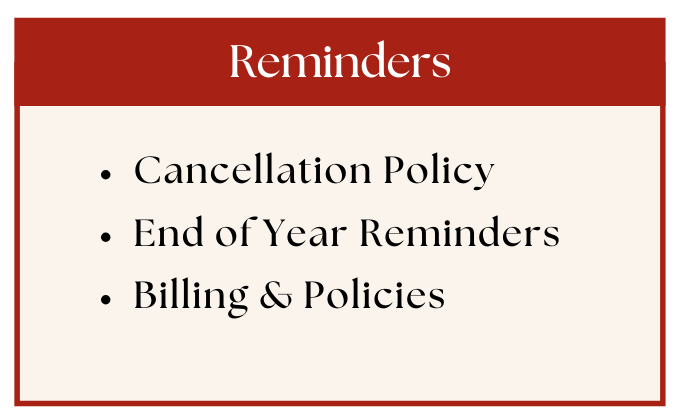
If someone other than a parent regularly brings your child to therapy or if you wish to allow us to coordinate with other professionals (e.g., school staff, additional therapists), ensure that you’ve completed a HIPAA Authorization Form.
Teen Nights
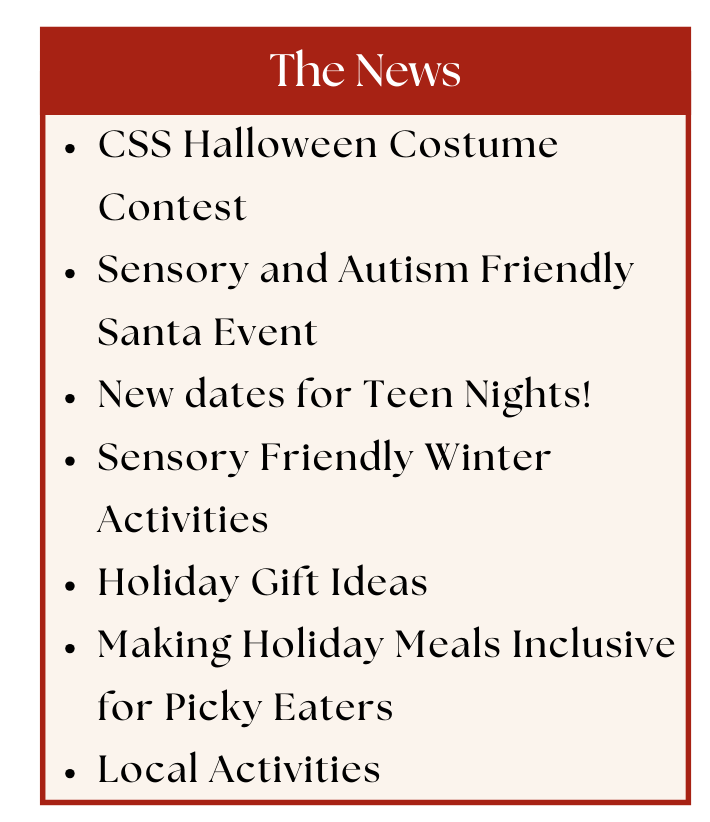
We added new dates for our very popular Teen Nights! To register, click here.
- February 7th
- March 7th
- April 4th
- May 2nd
CSS Halloween Costume Contest
CSS Halloween Costume Contest

1. DIY Snow Globes
Create a sensory-friendly snow globe using a jar, water, glitter, and small toys (e.g., winter animals, snowmen). This activity can be soothing for children who enjoy visual and tactile sensory play. Therapy Benefits: Engages fine motor skills when children manipulate the small objects and tighten the jar lid. It also supports visual sensory input through the swirling glitter and the calm motion of the “snow” falling.
Instructions: Fill a small jar with water and add glitter, small winter-themed toys (like miniature snowmen or animals), and a bit of glycerin to make the glitter float slowly. Secure the lid tightly (and glue it if needed to prevent spills). Allow children to shake the jar and watch the glitter fall, helping them focus and calm down.
2. Sensory Snowman Building (Indoor Version)
Create a snowman indoors using sensory-friendly materials like white cotton balls, soft fabric scraps, or foam balls. Children can decorate the snowman with buttons, felt pieces, or even sensory textures like sequins, feathers, or textured foam.
Therapy Benefits: This activity helps with fine motor coordination (pinching, placing, gluing) and can provide tactile sensory stimulation through various textures. It also helps build visual-spatial awareness when arranging the parts of the snowman.
Instructions: Provide children with various materials (e.g., cotton balls, felt, foam, or fabric) and ask them to build and decorate their snowman on a table or large surface.
Encourage them to use different textures for each part of the snowman (e.g., smooth foam for the body, soft cotton for the scarf, or sequins for buttons).
3. Frozen Sensory Bins
Create a sensory bin with frozen elements, such as ice cubes with small toys frozen inside, or a tray of fake snow made from cornstarch and baking soda. This can be a fun winter sensory experience for children to explore with their hands.
Therapy Benefits: Helps children with tactile exploration, problem-solving (finding toys in the ice), and motor coordination (grasping ice cubes or using spoons to scoop).
Instructions: Freeze small winter-themed toys (e.g., tiny animals, snowflakes) inside ice cubes ahead of time. Set up a sensory bin with a mix of ice cubes, cornstarch “snow,” or even just the ice cubes on their own. Provide spoons, cups, or spray bottles with warm water to help “melt” the ice and reveal the toys.


Winter Vocabulary Building
Use winter-themed books, flashcards, or picture prompts to introduce and practice winter-related vocabulary words. Examples include: snow, snowflakes, ice, sleet, mittens, scarf, hot cocoa, igloo, and polar bears.
Goal: Help children expand their vocabulary by discussing the meaning of new words, using them in sentences, and engaging in simple Q&A sessions.
Example: “What do you wear when it’s cold outside? A scarf, mittens, and a coat! Let’s say those words together: scarf, mittens, coat.”
Storytelling with Winter Themes
Create simple stories or prompts around winter scenarios (e.g., building a snowman, going sledding, or celebrating a winter holiday). Encourage the child to retell the story using new vocabulary words or sentences.
Goal: Improve sentence structure, sequencing, and narrative skills. You can also focus on targeting specific sounds or word endings (e.g., “-ing,” “-ed,” etc.) during the storytelling.
Example: “Let’s tell a story about a snowman! What happened first? He was made out of snow. What happened next? He had a carrot nose and coal eyes.”
Winter-Themed Rhyming and Phonemic Awareness
Use winter words for rhyming activities. For example, “snow” can rhyme with “go,” “toe,” “show,” etc. Have the child come up with other words that rhyme or complete sentences with rhyming words.
Goal: Improve phonological awareness by identifying and producing rhyming words, as well as targeting initial sounds and phoneme blending.
Example: “Can you think of words that rhyme with snow? How about ‘go,’ ‘low,’ and ‘slow’? Let’s say them together: snow, go, low, slow!”
Articulation Practice with Winter Words
Focus on specific sounds by using winter-related words that contain those sounds. For example, if you’re targeting the /s/ sound, practice words like “snow,” “sled,” and “scarf.”
Goal: Improve articulation by practicing speech sounds in the context of fun, winter-related words and phrases.
Example: “Let’s practice the /s/ sound. Can you say ‘snow,’ ‘sled,’ and ‘scarf’ clearly?”

Weighted Blanket or Sensory Breaks
Use a weighted blanket during a quiet time or sensory break, or provide a sensory-friendly corner with winter-themed items like soft fabrics, pillows, or plush toys.
Goal: Provide proprioceptive input to help children regulate their emotions, focus, and stay calm during overstimulating moments.
Example: “Let’s wrap up in this cozy blanket to help us feel calm and cozy, just like a snowstorm outside. You can rest here for a few minutes before we play again.”
Winter-Themed Fine Motor Exercises
Focus on activities that improve fine motor strength and dexterity using winter props, like:
Threading winter beads (e.g., snowflakes or icicles) onto a string to create holiday decorations.
Using tweezers or tongs to pick up and move fake snowflakes or cotton balls from one spot to another.
Goal: Strengthen hand muscles, improve grasping and pinching skills, and encourage hand-eye coordination.
Example: “Can you use these tongs to pick up the snowflakes and put them into the jar? This will help your fingers get stronger.”
Fine Motor Skill Practice with Winter Crafts
Create winter-themed crafts like paper snowflakes, snowman drawings, or holiday cards. These activities help children practice cutting, gluing, drawing, and other fine motor tasks.
Goal: Improve hand-eye coordination, finger dexterity, and bilateral coordination.
Example: “Let’s cut out a snowflake! Use your scissors carefully to make each side even. Now let’s glue the pieces together to make a winter decoration.”
Winter-Themed Obstacle Course
Set up an indoor obstacle course inspired by winter activities, like “sledding” down a hallway (using a blanket or soft mat), “building a snowman” by stacking soft balls or pillows, or balancing on a “frozen pond” (a line of tape or a balance beam).
Goal: Improve gross motor skills, balance, and coordination through physical movement that mimics fun winter activities.
Example: “Let’s pretend we’re sledding down a hill! Can you run to the finish line without falling off the path? Now, let’s build a snowman with these soft pillows.”
Holiday Gift Ideas
Holiday Gift Ideas
- “The Snowy Day” by Ezra Jack Keats or “Bear Snores On” by Karma Wilson. Books with simple, repetitive language are perfect for practicing articulation, sentence structure, and narrative skills.
Speech Goals: Practice retelling the story, answering “wh” questions, or focusing on specific sound patterns as children re-read lines aloud.
Why it’s a good gift: Storybooks encourage storytelling, sequencing, and language development while aligning with the fun, cozy themes of winter.
- “Magnetic Word Builder: Winter Edition” This gift allows kids to create simple sentences with magnetic words related to winter (snowman, sled, ice, etc.).
Speech Goals: Promote sentence formation, word retrieval, and syntax skills.
Why it’s a good gift: It encourages children to practice putting words together and creating complete sentences, making language-building interactive and visually engaging.
- Weighted Blankets or Weighted Stuffed Animals products provide proprioceptive input, which helps with body awareness, calming, and self-regulation.
OT Goals: Encourage relaxation, focus, and emotional regulation during sensory breaks or quiet time.
Why it’s a good gift: Weighted blankets can provide comfort and help children who need deep touch pressure for self-regulation.
- Fidget Toys with Winter Themes Snowman Stress Ball or Snowflake Fidget Spinner Fidget toys with winter designs offer tactile and visual sensory input to help children focus and self-regulate.
OT Goals: Encourage sensory exploration and improve focus and concentration by using tactile and visual fidgets. These are particularly helpful for children with sensory needs. Why it’s a good gift: Fidget toys are a great tool for sensory regulation, particularly for children who may benefit from movement while they work on tasks.

Sensory and Autism Friendly Santa Event December 7, 2024 Cornerstone Montclair 198 Bellevue Avenue Montclair, NJ 07043 Register Here
Kids Night
December 13, 2024 Marcade Family Fun Center 437 U.S. 46 Dover, NJ 07801 Register Here
Chanukah in Legoland
December 18, 2024
The Chabad Center 194 Ratzer Road Wayne, NJ 07470 Register Here
Holiday Lights Spectacular until December 31, 2024 560 Northfield Ave. West Orange, NJ 07052
Dates and Times Here (no registration needed)